Branches

Markers of Children's Agency

In our observations of young children ages 3 months to 8 years-old across the U.S., we have located the most common ways that young children enact their agency. 

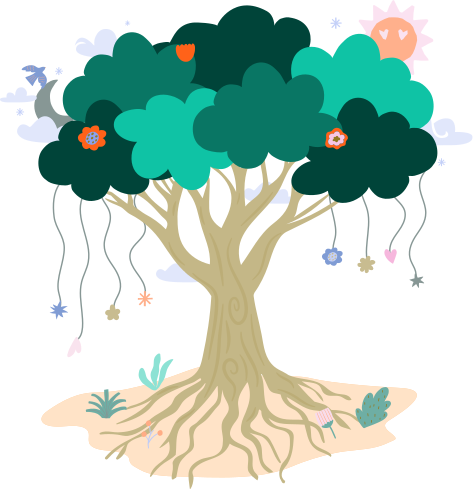
We divided children’s uses or “markers” of agency into seven categories. Each category and the most common markers of agency in that category are listed below.

The Seven Categories or “Branches”

One community, school, classroom or person cannot offer every single one of the markers of agency on this list. Which ones are most important to you and your community? Or to the parents and families? Or to the leaders and politicians?

*Most markers of agency are impossible to sustain unless there is support from the roots, trunk and some favorable conditions.

Children can influence or choose the what (ex. topics, interests, books, projects)

Markers: 

  1. Explore across disciplines 
  2. Initiate a topic of discussion 
  3. Choose activities 
  4. Select books 
  5. Contribute knowledge 
  6. Change or steer a topic 
  7. Generate own project or activities 
  8. Tell Stories

Children can influence or choose the how (ex. activities, experiences, modalities)

Markers:

  1. Observe peers and adults 
  2. Chat with peers  
  3. Initiate an activity 
  4. Figure things out (make mistakes) 
  5. Learn without being still and silent 
  6. Ask questions  
  7. Contribute to a shared activity 
  8. Keep working on something 

Children can build on personal and collective strengths (ex. ways of being, background, family values, languages) 

Markers:

  1. Observe teachers/administrators drawing upon family and community expertise  
  2. Learn about themselves 
  3. Use home language without reprimand 
  4. Express a range of emotions without being shamed 
  5. See representations of many families and communities 
  6. Support children’s differences

Children can shape the world around them and make sacrifices for the sake of others

Markers:

  1. Follow norms without lots of reminders
  2. Accept limits without rewards and punishments
  3. Compromise
  4. Demonstrate knowledge of each other’s lives
  5. Help create and maintain calm
  6. Care for others
  7. Listen to peers
  8. Care for community resources

Children can determine engagement (friendships, connection, bonds, collaboration, conversation)

Markers:

  1. Choose who to learn with
  2. Interact with different (many?) classmates
  3. Seek help from peers
  4. Problem-solve
  5. Learn with more than human world
  6. Be listened to by peers
  7. Learn with children outside classroom community
  8. Have conversations with adults that are not about the rules

Children can have a say in how they show what they know and can do

Markers:

  1. Teach one another
  2. Plan learning experiences
  3. Create materials
  4. Share concerns
  5. Give and receive feedback from peers
  6. Represent learning
  7. Have some time without adult interventions

Children can change and influence the spaces in which they learn

Markers:

  1. Spend time outdoors
  2. Move around the space
  3. Choose materials
  4. Choose space at group time
  5. Alter the physical environment
  6. Care for the natural world
  7. Learn outside classroom
  8. Walk without rigid lines

Reflection Prompts

Use these prompts as part of your daily or weekly reflection practice. Consider keeping a journal or discussing them with colleagues.

  1. Which markers bring you joy as a teacher?
  2. Do you view these markers as privileges to earn, or as natural parts of learning?
  3. How often do children get to initiate discussions, activities or choose their own topics of study?
  4. How much can children struggle, make mistakes, and figure things out?
  5. Are conversations with children deeper than just rules and instructions?
  6. How do children connect with the broader community?
  7. What chances do children have to care for each other and the natural world?
  8. Do children have input on how they share what they’ve learned?

Want to be notified when the course is available?